Early Years Foundation Stage
|
|
|
|
What does the EYFS at Frogwell offer our children?
The children at Frogwell School are welcomed into a nurturing and caring environment, where each child’s unique characteristics and personalities are valued and embraced. We build positive relationships with the children and work in partnership with parents to support the learning and development of all children. The children learn well in enabling environments (both inside and outside) with teaching and learning that supports the individual needs and interests of all children. We aspire for all children to develop a positive attitude towards school and have high aspirations for their own learning and achievement. As our school motto states, we want our children to be motivated and enthusiastic to ‘learn for life and fly high’.
What are the main aims of our EYFS curriculum?
At Frogwell we aim for all children to make at least good progress from their starting points and that they are fully prepared for the next stage of their education.
Our curriculum aims to:
- Provide a wide range of learning opportunities, both inside and outside, that inspires and motivates all children.
- Broaden children’s experiences to extend their knowledge and skills.
- Use children’s own interests, where possible, when planning learning to support, consolidate and deepen knowledge.
- Offer children practical, first hand learning experiences that engages all learners.
- Develop happy, healthy, independent, resilient and confident learners.
- Foster high aspirations for all learners.
- Provide firm foundations for a lifelong love of learning.
How is teaching and learning in EYFS organised?
We follow the Early Years Foundation Stage statutory framework which sets out 7 main educational programmes (communication and language, personal, social and emotional development, physical development, literacy, mathematics, understanding the world and expressive arts and design). Alongside this we use Development Matters to support teaching and learning of the essential skills and knowledge in all areas of learning (using checkpoints across the year to monitor learning and development). We have carefully planned our curriculum so that it is progressive, inclusive and aspirational for all learners, following a topic- based approach. Children will learn through a balance of teacher led and child-initiated learning, where play is highly valued and central to children’s learning experiences. Quality adult interactions, through questioning and enabling play, will support and extend learning. Continuous and enhanced provision (both inside and outside) will enable children to consolidate and deepen their knowledge and understanding. Right from the start we provide opportunities to develop a love of reading and provide a language rich environment. We follow the Little Wandle phonics scheme and White Rose Maths (teaching for mastery). At the end of the Reception year, each child’s level of development is assessed against the Early Learning Goals and this information will assist year 1 teachers to plan effectively for a smooth transition into KS1.
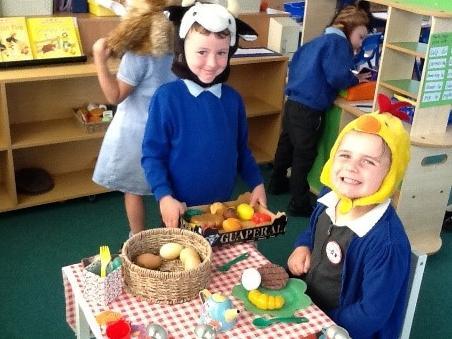
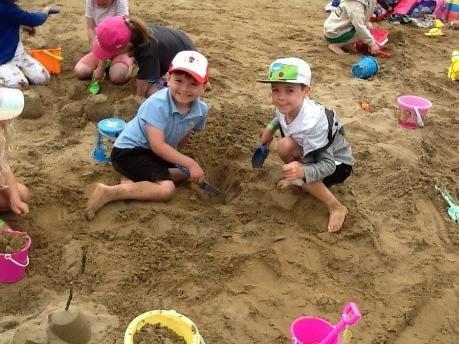
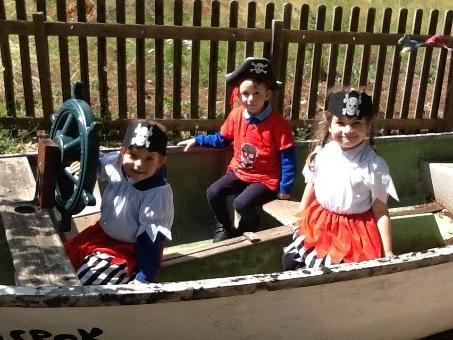
When children join our school in Reception class, we want them to develop as independent, motivated learners who are full of curiosity about the world around them. Within our fun, happy and secure environment, our children play and explore using the indoor and outdoor environment where they are encouraged to be active and develop creative and critical thinking.
Writing in EYFS
‘Writing’ in EYFS begins with developing gross and fine motor skills (outside play, threading, using tweezers, card game etc), so that children have the strength in their fingers for mark-making. Children are encouraged to mark-make in all areas of provision using a variety of resources (e.g. using chalks, paintbrushes, sticks in mud, pencils and pens). As soon as children begin to learn letter sounds (phonemes) they will also learn how to write these (graphemes), following the Little Wandle phonics scheme. Initially children will be supported to write individual letters, then simple VC/CVC words (segmenting the letter sounds), moving onto captions and then writing sentences. We use the Drawing Club approach, where children are encouraged to write through the magic and joy of stories. Children will also be learning to write their names, beginning with a capital letter and then lower-case letters.